





KOCHI:
A quiet but devastating story of climate vulnerability unfolded at the Kochi-Muziris Biennale (KMB) with the screening of Uppuveedukal (Houses of Salt), a 22-minute powerful documentary directed by Arathi M.R.
Made in 2025, the film turns its gaze towards Puthanvelikkara in Ernakulam district, where tidal flooding has rendered everyday life increasingly unliveable and migration a matter of survival rather than choice.
The documentary, shown as part of the four-day ‘Soil Assembly’ series, captures the slow violence of climate change along Kerala’s fragile coastline, where repeated tidal floods damage homes, corrode foundations and silently erode any sense of permanence.
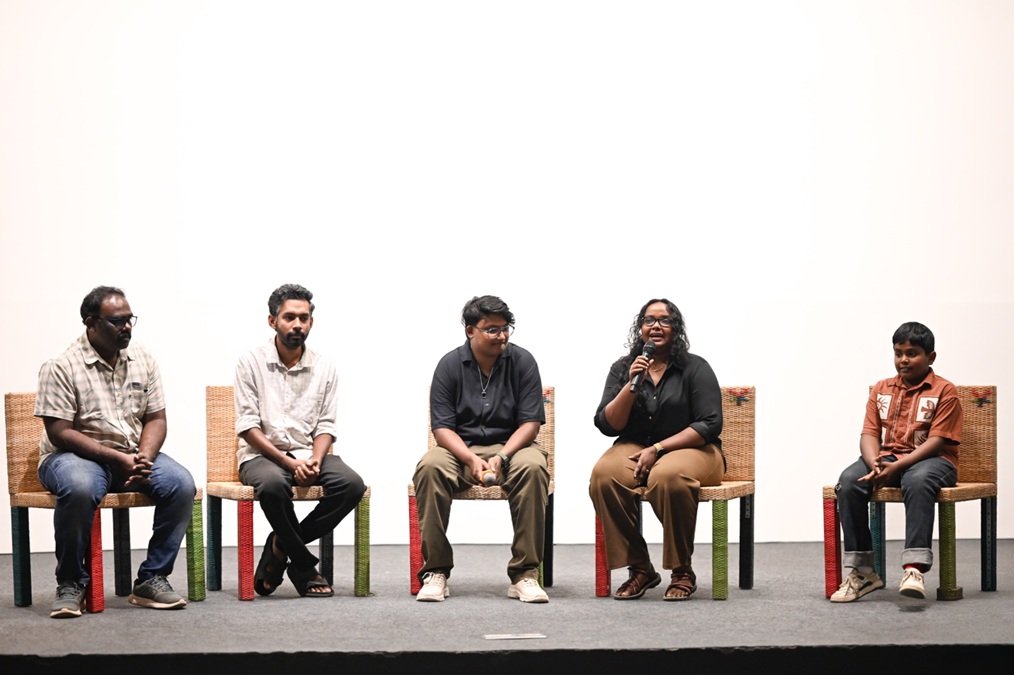
‘The silence of this disaster’, as Arathi describes it, is central to the film’s emotional register, an ongoing crisis that rarely registers as an emergency but continues to deeply hurt the community long after the waters recede. “Even after many screenings, the wound is still fresh,” she said during an interaction following the screening.
Uppuveedukal foregrounds the lived experiences of residents, particularly women, who bear a disproportionate burden of the flooding. Many are forced to clean their homes twice a day as saltwater seeps in repeatedly. Several of them work as domestic workers in the city, returning each evening to houses that are steadily being eaten away by saline tides.
The film also documents how nearly 40 per cent of the population now wants to move away. “I want to live in a dry place,” one resident says, summing up a desire shaped by exhaustion rather than aspiration.
Arathi does not frame climate change as a sudden catastrophe but as an inevitable process. “That’s how we evolved. I don’t think there is a permanent solution,” she said, adding that innovation in building materials may offer in partial relief.
The film notes how traditional practices persist alongside vulnerability, including the cultivation of Pokkali rice, a salt-resilient variety that has long adapted to the region’s brackish conditions.
The making of Uppuveedukal itself mirrors the fragility it documents. Shooting began in 2022 but was delayed by multiple challenges. “We waited three more years,” Arathi said, noting that the team also endured profound personal losses, including the death by suicide of a collaborator, George, and the loss of two crew members.
Despite this, the filmmaker emphasised that the documentary’s purpose extends beyond storytelling. “We are trying to show this to the authorities and create some policy intervention,” she said.
While coastal distress is visible across Kerala, Uppuveedukal stands as a quiet but urgent appeal to amplify voices that are too often forced to endure in silence.


more recommended stories

KOCHI:Each handmade Manchaha (from the heart).

KOCHI:The current assessment of Kochi’s vulnerability.

KOCHI:Former Lok Sabha member Subhashini Ali.

KOCHI:The Students’ Biennale at St Andrew’s.

KOCHI:A three-day Terracotta & Wheel Pottery.

KOCHI:A four-day ‘Soil Assembly’ conference began.

NEW DELHI:Showcasing Kerala as an experiential.

KOCHI:On entering the room, the viewer.

KOCHI:Thai visual artist and documentary filmmaker.

KOCHI:Melancholic and haunting, the music lingers.
